
Aghanya Info Solution Pvt. Ltd.

Mobile Development

Android Development Course

Design and build native Android apps with Kotlin — from your first screen to local data, networking and preparing a release for Google Play.

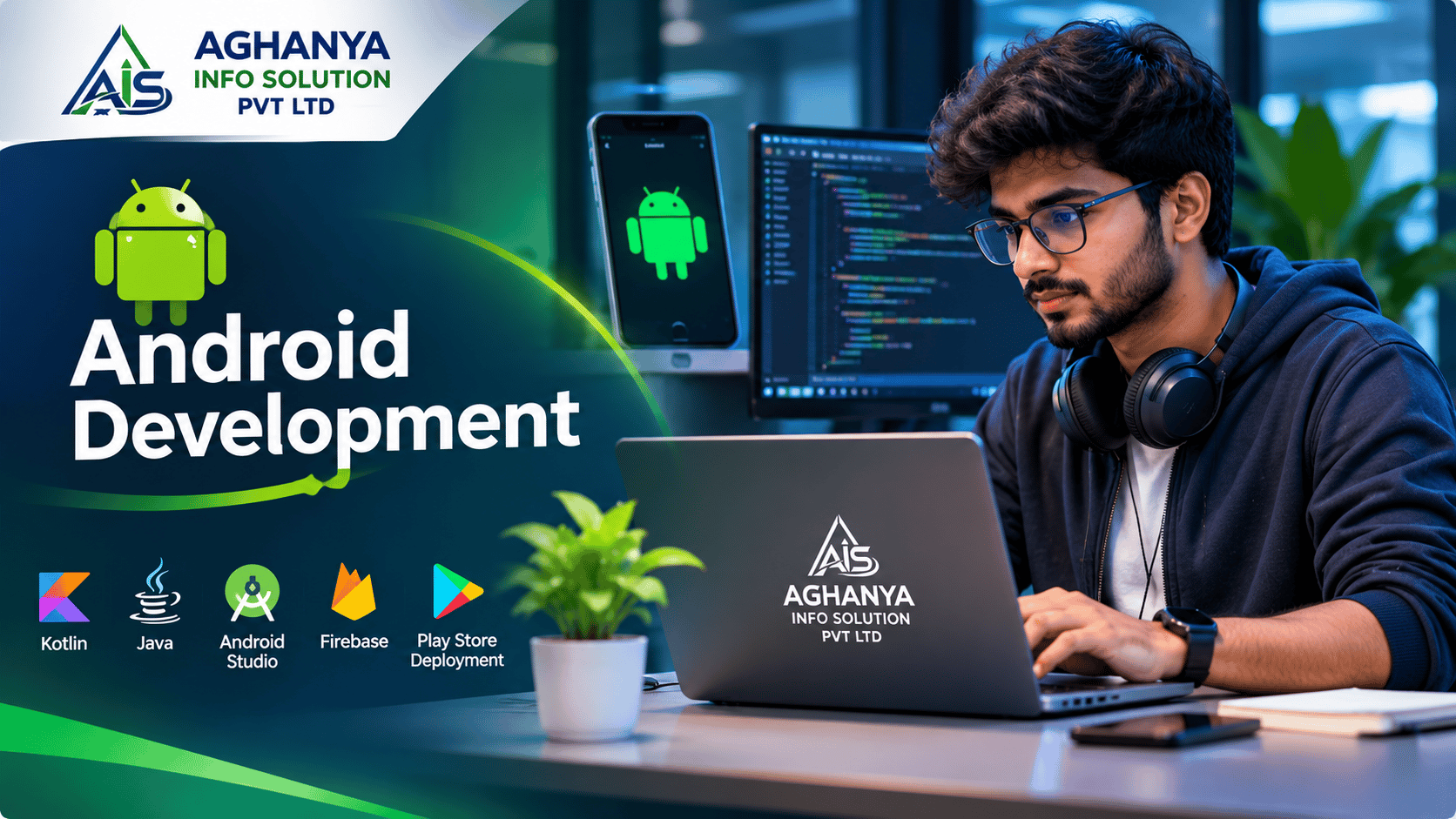
Android Development course illustration: a learner working on Android Development

The technology

What is Android Development?

Android is Google's mobile operating system. Native Android apps are built in Android Studio, today mainly in Kotlin, using Android Jetpack libraries such as Compose for interfaces and Room for local data.

Why it matters

Android runs on most of the world's smartphones, so organisations of every size need people who can build and maintain Android apps — and who can work smoothly with backend and testing teams.

What you'll study

Inside the Android Development course

Android runs on the majority of smartphones worldwide. This course teaches how to design, build and publish native Android applications.

You learn Kotlin, the Android application lifecycle, building user interfaces, storing data locally, consuming web APIs and preparing an app for release.

Learning objectives

The skills you may develop. By the end of the course you should be able to:

  • Program confidently in Kotlin
  • Build screens with layouts and Jetpack Compose
  • Manage app lifecycle, navigation and state
  • Persist data locally with Room
  • Consume REST APIs in an Android app
  • Prepare an app for the Google Play Store

Course modules

Android Development syllabus outline

6 modules, each building on the last — from fundamentals to applied practice.

  1. Module 1: Kotlin essentials

    Learn Kotlin, Google's preferred language for Android.

    • Syntax and types
    • Functions and lambdas
    • Classes and null safety
  2. Module 2: Android fundamentals

    Understand how an Android app starts, runs and moves between screens.

    • Android Studio
    • Activities and lifecycle
    • Intents and permissions
  3. Module 3: User interfaces

    Design screens with layouts and Jetpack Compose.

    • Layouts and views
    • Jetpack Compose basics
    • Lists and navigation
  4. Module 4: Architecture

    Structure apps so they stay maintainable as they grow.

    • ViewModel and LiveData / Flow
    • MVVM pattern
    • Coroutines
  5. Module 5: Data and networking

    Save data on the device and connect to online services.

    • Room database
    • Retrofit and REST APIs
    • JSON parsing
  6. Module 6: Release

    Test, sign and publish an app to Google Play.

    • Testing basics
    • App signing
    • Publishing to Google Play

Tools & technologies

  • Android Studio
  • Kotlin
  • Android Emulator
  • Firebase
  • Git

Who should consider it

  • Aspiring mobile app developers
  • Java or web developers moving into mobile
  • Graduates targeting Android developer roles

Before you start

Basic programming knowledge in any language is recommended.

Batch timings and fees are shared directly by our team on enquiry.

Let's Find the Right Course for You

Tell us what you want to learn and where you are starting from. Our team will help you choose the right course and share the relevant details.

Prefer a call? Request a callback

By sending, you agree to be contacted about this request.

Keep exploring

  • Software Development

    Java

    Build a dependable foundation in Java and learn to write code that other developers can read, test and extend — the habits that matter on real teams.

    Key learning areas

    • Java fundamentals
    • Object-oriented programming
    • Exceptions and I/O

    Suits: Students and graduates starting a software career

  • Software Development

    .NET

    Learn to build web applications and APIs on Microsoft's .NET platform with C# — a modern, strongly typed language known for clear code and excellent tooling.

    Key learning areas

    • .NET platform basics
    • C# language
    • Object-oriented C#

    Suits: Graduates aiming for Microsoft-stack developer roles

  • Software Development

    Python

    Start with a language prized for its readability, then put it to work on files, data and automation — writing code that stays clear as it grows.

    Key learning areas

    • Python foundations
    • Data structures
    • Functions and modules

    Suits: Beginners learning their first programming language